

If you have a missing tooth or a denture that slips, dental implants can help you smile, speak, and chew with confidence again. An implant replacement looks and feels like a natural tooth. It is strong, stable, and built to last.
What Are Dental Implants
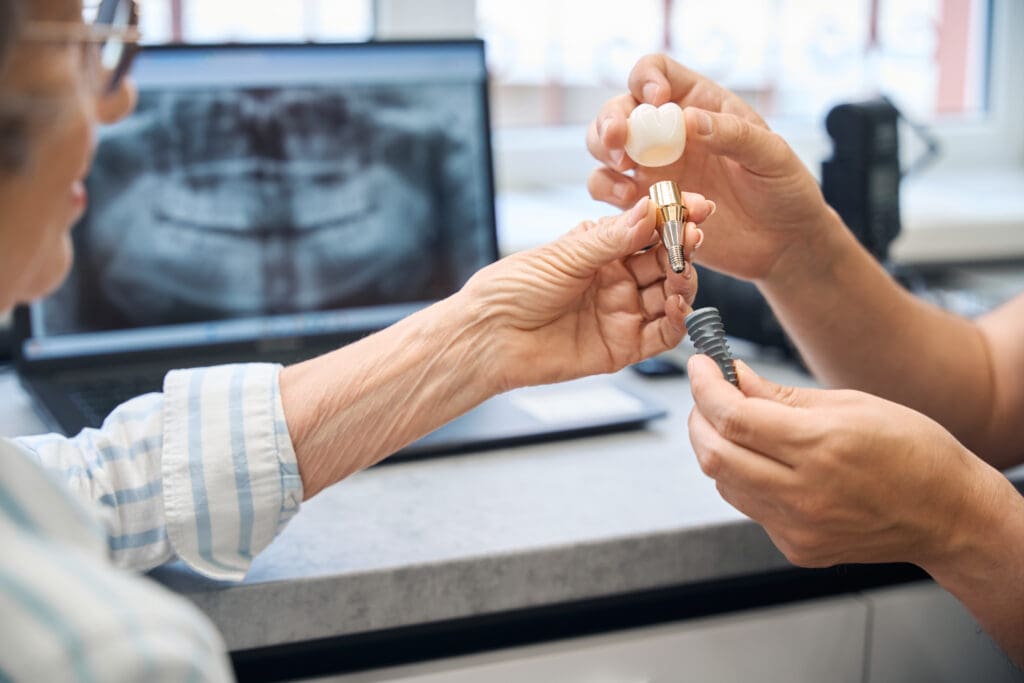
A dental implant is a small post, usually made of titanium, that acts like a new tooth root. Your dentist places the post in your jawbone where the missing tooth used to be. Over time, your bone grows around the implant in a natural process called osseointegration. This creates a strong base. After healing, a connector called an abutment is attached to the post. Then a custom crown, bridge, or denture is placed on top. The result looks natural and feels solid.
Implants are different from bridges and removable dentures. A traditional bridge needs the teeth next to the gap to be trimmed down. A denture rests on the gums and can move. A dental implant stands on its own. It protects nearby teeth and gives you a steady bite. Because the implant replaces the root, it also helps keep the jawbone healthy.
Many people can get implants. Good gum health and enough bone are important. If the bone is thin, your dentist may recommend bone grafting or a sinus lift to build support. Adults of many ages do well with implants. If you smoke, quitting helps improve healing. Conditions like diabetes should be under control before surgery. Your dentist will review your health history and take 3D images to plan your care.
Types of Dental Implants
Dental implants are flexible. Your dentist will help you choose the right type for your needs, budget, and timeline.
Single Tooth Implant: Replaces one missing tooth with one implant and one custom crown. It blends in with your smile and protects the teeth on each side.
Implant-Supported Bridge: If you are missing several teeth in a row, two or more implants can hold a bridge. This avoids trimming healthy teeth and gives strong support.
Implant-Supported Denture (Overdenture): A full denture that snaps onto 2–6 implants for better stability. It still comes out for cleaning but is much steadier than a regular denture.
Fixed Full-Arch Implants (All-on-4/All-on-X): A full set of teeth that is fixed to 4–6 implants per arch. This option does not come out at home and lets you enjoy a firm bite. Many patients call this “teeth in a day,” since a temporary set can often be placed the same day as surgery.
Mini Dental Implants: Smaller posts used in some cases to support a denture when bone is thin. They may reduce healing time, but they are not right for everyone.
Immediate Implants and Immediate Load: In select cases, the implant can be placed at the same time a tooth is removed. Sometimes a temporary tooth is placed right away. Your dentist will decide if your bone and bite make this safe.
What to Expect
Your dental implant journey has clear steps. Your team will guide you from start to finish.
Consultation and Planning: You will meet with your implant dentist to talk about your goals, your health, and your budget. We will take digital X-rays or a 3D scan (CBCT) to measure your bone and map out nerves and sinuses. We will review options like a single implant, an implant bridge, or a fixed full-arch. You will get a clear treatment plan, timeline, and cost estimate. We can also discuss insurance and financing options if needed.
Pre-Treatment (If Needed): If you need a bone graft or sinus lift, this is done first to build support. A graft can be placed at the time a tooth is removed or later. Healing usually takes a few weeks to a few months, depending on the case.
Implant Surgery: Implant placement is a routine, in-office procedure. Local anesthesia numbs the area. Many patients also choose sedation to relax. Your dentist places the titanium post into the jawbone at a precise angle. A guide may be used for accuracy. In many cases, a small cover or healing cap is placed over the implant. If you are getting a same-day temporary tooth or a temporary denture, it will be adjusted for comfort before you go home.
Healing and Osseointegration: Over the next 3–6 months, your bone fuses to the implant. This is what makes implants so strong. During this time, you can usually wear a temporary to fill the space. Most people have only mild soreness for a few days after surgery. Over-the-counter pain relief and a soft-food diet help. We will schedule checkups to watch your progress.
Abutment and Impressions: Once the implant is stable, we attach the abutment. This connector links the implant to your new tooth or teeth. We will take digital scans or impressions to make your custom crown, bridge, or denture. Shade and shape are matched to your smile.
Final Restoration and Bite Check: When your new teeth are ready, we secure them to the abutment(s). We will check your bite and make small tweaks so everything feels right. You will get simple home-care tips to keep your implants and gums healthy.
Aftercare and Maintenance: Brush and floss daily. Many patients like using a water flosser around implants. Come in for regular cleanings and exams. Avoid smoking and do not use your teeth as tools. With good care, implants can last for many years. If you grind your teeth at night, a nightguard can protect your investment.
Comfort and Safety: Most patients say implant surgery is easier than they expected. You will be numb during the procedure. We offer options like local anesthesia, oral sedation, or IV sedation when appropriate. Swelling and minor bruising can happen and usually improve in a few days. As with any surgery, there are risks such as infection or implant failure, but these are rare, especially with careful planning and good home care.
Benefits of Dental Implants
- Look, feel, and function like natural teeth: Custom crowns and bridges match your smile and give you a strong, steady bite.
- Long-lasting solution: With proper care, implants are designed to last many years, often decades.
- Protects bone and facial shape: Implants replace the root and help stop bone loss, keeping your face fuller and more youthful.
- Saves nearby teeth: No need to grind down healthy teeth for a bridge.
- Eat your favorite foods: Enjoy crisp apples, salads, and more with confidence.
- Clear speech and comfort: No slipping or clicking like with loose dentures.
- Easy to care for: Brush, floss, and visit for regular cleanings—no special adhesives.
- High success rate: Careful planning, 3D imaging, and modern techniques support strong results.
- Flexible options for many needs: From a single tooth to a full smile, there is an implant solution for most patients.
- Cost-effective over time: While the upfront cost can be higher than a bridge or denture, implants often last longer and may reduce future repair costs.
Common Questions
How long does the process take? Many patients complete treatment in 3–6 months, depending on healing and whether bone grafting is needed. Same-day teeth may be possible for full-arch cases, with a final set placed after healing.
Will insurance cover dental implants? Some plans help with parts of care, such as the crown or denture. We can review your benefits and discuss payment plans and financing to make care fit your budget.
Am I a candidate? If you have good gum health and enough bone, you are likely a candidate. Even if your bone is thin, grafting may make implants possible. A consult and 3D scan will give clear answers.
Take the Next Step
A complete smile can change how you look, speak, and feel every day. If you are ready to replace a missing tooth or upgrade from a removable denture, dental implants may be the best path for you. Contact our office at 610-600-1559 or fill out our online form to schedule a consultation. We will answer your questions, review your options—from single tooth implants to All-on-4—and build a plan that fits your timeline, comfort, and budget.