

A healthy, strong smile helps you eat, speak, and feel confident every day. When a tooth is cracked, worn down, or badly decayed, a dental crown can protect it and make it look and feel like a natural tooth again. Crowns are common, safe, and long-lasting.
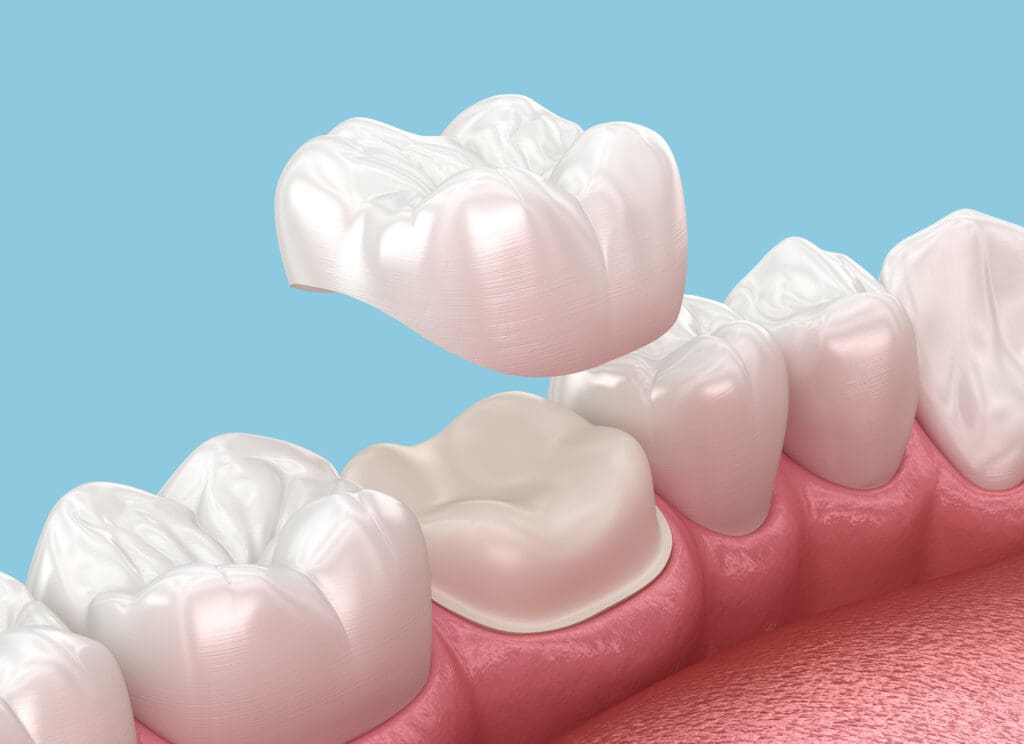
What is A Dental Crown
A dental crown is a custom-made “cap” that covers the entire visible part of a tooth. It restores the tooth’s shape, size, and strength, and it improves the way the tooth looks. Think of it like a protective helmet for a weak or damaged tooth. Once a crown is in place, you can bite and chew more comfortably.
Dentists use crowns for many reasons. They can save a tooth after a large cavity or a root canal. They can fix a broken or cracked tooth. They can also improve the color and shape of a tooth that does not look the way you want. Crowns are made from strong materials like porcelain, ceramic, zirconia, metal, or a mix of porcelain and metal. Many crowns today are tooth-colored, so they blend in with your smile.
A well-made crown fits snugly and feels natural. It can last many years with good care. Most crowns last 10 to 15 years or even longer, depending on your bite, habits like grinding, and your home care routine.
What to Expect During the Procedure
Getting a dental crown usually takes one or two visits, depending on the type of crown and your dentist’s technology.
First visit: exam and preparation
- Exam and X-rays: Your dentist reviews your tooth and may take X-rays to check the roots and bone. If the tooth is infected or the decay is deep, a root canal may be needed before the crown.
- Numbing the tooth: Your dentist numbs the area so you stay comfortable.
- Shaping the tooth: A small amount of enamel is gently removed to make room for the crown. This step helps the crown fit well and feel natural.
- Impression or digital scan: Your dentist takes a mold or a digital 3D scan of your tooth and bite. This guides the dental lab (or in-office system) to craft your custom crown.
- Temporary crown: If your crown is made in a lab, you’ll leave with a temporary crown to protect your tooth while the permanent crown is made. It’s normal for a temporary crown to feel a little different.
Second visit: placing the permanent crown
- Removing the temporary: The temporary crown comes off and the tooth is cleaned.
- Fitting the crown: Your dentist checks the fit, color, and bite. Small adjustments are made so the crown feels just right.
- Cementing the crown: The crown is bonded to your tooth with a strong dental cement. You’ll be asked to bite down gently while it sets.
Some offices offer same-day crowns using CAD/CAM technology (often called CEREC crowns). With this option, your dentist can scan, design, and place a ceramic crown in a single visit. There is no temporary crown and no second appointment, which is very convenient.
After your crown is placed, it is common to have mild sensitivity for a few days. Avoid very sticky or hard foods at first if you received a temporary crown earlier. Brush twice a day, floss daily (slide floss out gently near a temporary crown), and keep up with checkups. If your bite feels off or you notice soreness that does not go away, call your dentist for a quick adjustment.
Reasons for Needing A Dental Crown
Your dentist may recommend a tooth crown for many reasons:
- A large cavity or filling has weakened the tooth
- A cracked, broken, or worn-down tooth needs strength and protection
- After a root canal to seal and support the tooth
- To cover a dental implant as the new visible tooth
- To improve shape, size, or color for a better-looking smile
- To hold a dental bridge in place by crowning the teeth next to a gap
- To protect teeth from grinding or heavy biting forces
- To replace old, failing crowns with new, tooth-colored options
If a tooth is too damaged for a filling but can still be saved, a crown is often the best choice. It protects the remaining tooth structure and helps prevent future breaks. Crowns can also make your smile more even and bright, especially when used alongside other cosmetic treatments.
Types of Crowns
There are several kinds of crowns. Your dentist will help you choose the best type based on the tooth’s location, your bite, your goals, and your budget.
- All-ceramic or all-porcelain crowns: These are popular for front teeth and visible areas because they look very natural and are tooth-colored. They are metal-free and a great choice for people with metal sensitivities. Modern ceramics can also work well on back teeth in many cases.
- Zirconia crowns: Zirconia is a very strong ceramic. These crowns are durable and more resistant to chipping. They can be tooth-colored and are good for back teeth where you chew the most.
- Porcelain-fused-to-metal (PFM) crowns: These have a metal base with porcelain on the outside. They are strong and have been used for many years. In some cases, a fine dark line near the gum may appear over time as gums naturally shift.
- Full metal crowns (gold or other alloys): Metal crowns are extremely strong and long-lasting. They are great for molars that do most of the chewing. They do not chip, but they are not tooth-colored, so they are less common for front teeth.
- Stainless steel crowns: Often used for children’s primary teeth when a quick, strong solution is needed. They are pre-formed and placed in one visit.
Some crowns are made in a dental lab and take about 1–2 weeks to return. Others are same-day crowns made in the office using digital scans and milling machines. Both options can deliver excellent results. What matters most is proper diagnosis, precise preparation, and a crown that fits your bite well.
Care and Maintenance
Taking care of a crowned tooth is easy and important. Brush twice daily with fluoride toothpaste. Floss around the crown every day to keep your gums healthy. Avoid chewing ice, biting hard objects, or using teeth to open packages. If you grind your teeth at night, ask about a night guard. Good habits can help your crown last many years.
Safety and Comfort
The crown procedure is safe and routine. Local anesthesia keeps you comfortable. If you feel nervous, tell your dentist. Options like numbing gel before injections, gentle techniques, and even mild sedation when appropriate can help you relax.
Cost and Insurance
The cost of a dental crown varies by material, tooth location, and your insurance plan. Many plans cover part of the cost when a crown is needed to restore function. Your dental team can review your benefits, explain options, and help with estimates before treatment begins.
Ready to Restore Your Tooth?
A dental crown can protect your tooth, improve your bite, and refresh your smile. Whether you need to fix a cracked tooth, restore a tooth after a root canal, or improve the look of your smile, a crown is a strong and attractive solution. If you have questions about porcelain crowns, zirconia crowns, or same-day crowns, call us at 610-600-1559 or schedule a visit. Your dentist will examine your tooth, explain your choices, and guide you to the best fit for your smile.