

When you hear the word laser, you might think of sci-fi movies or industrial cutting tools. Not exactly what you want near your mouth, right? But here at Strafford Dental, lasers are one of our favorite tools. Not because they look cool, but because they make dental work faster, gentler, and easier to recover from. We’ve been offering laser dentistry for years, and it still surprises patients how different the experience feels.
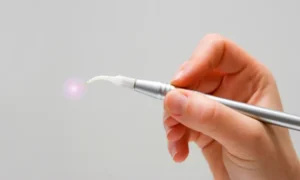
What Is a Dental Laser?
A laser is just a focused beam of light. But that beam can do some pretty useful things inside your mouth.
Different lasers work at different wavelengths. Some are designed to work on soft tissue, like gums. Others target hard tissue, like tooth enamel or even bone. We use the right laser for the right job, depending on what you need.
The beauty of a laser is precision. It can target a tiny area without affecting the surrounding tissue. That means less bleeding, less swelling, and less discomfort afterward.
What Can We Treat With a Laser?
A dental laser can handle many common dental issues without the need for a traditional drill or scalpel.
- Gum disease: This is one of our most common uses. When plaque builds up below the gumline, it causes infection and inflammation. A laser can remove that infected tissue and kill bacteria without cutting or stitching your gums. The recovery is faster, and many patients say it’s less painful than traditional deep cleaning.
- Cold sores and canker sores: These can be miserable. A low-level laser can reduce pain and speed up healing. Sometimes we can even stop a cold sore from fully forming if we catch it early enough.
- Gummy smiles: Some people feel like they show too much gum when they smile. A laser can gently reshape the gumline in minutes, giving you a more balanced look with almost no bleeding or downtime.
- Cavities: For small decay, we can use a laser to remove the damaged part of the tooth without the vibration or pressure of a drill. Some patients who usually need numbing shots don’t even need one for laser cavity work.
- Biopsies: If we see a suspicious spot in your mouth, we can use a laser to remove a tiny sample for testing. It’s quick, precise, and minimizes discomfort.
Why Choose Laser Over Traditional Tools?
Most dental work involves drilling, scraping, or cutting. Those things work, but they can also cause bleeding, swelling, and a longer recovery. Lasers reduce all of that. Lasers also cauterize as they go. That means they seal blood vessels as they work. Less bleeding. Fewer stitches. Less time with gauze in your mouth afterward.
Many patients also experience less post-treatment pain. That’s because the laser doesn’t generate the same kind of heat or pressure as a drill. Fewer sensitive nerves get triggered.
And for anyone with dental anxiety, lasers are usually quieter and less intimidating. No whirring drill sound. No vibration rattling through your skull. Just a gentle light beam doing the work.
Are There Any Downsides?
We’re honest about everything. Lasers aren’t always the right tool.
For larger cavities or deeper decay, a traditional drill might still be necessary. The same goes for certain fillings or crowns that need more shaping. And laser work can cost a bit more upfront because the equipment is expensive.
But we never use a laser just to charge more. We use it when it’s genuinely better for you. And we’ll always tell you why we’re recommending one approach over another.
Come See the Difference
If you’ve been putting off a dental visit because you dread the drill or the needle, call us. We’ll talk about whether laser dentistry could make your next appointment more comfortable.